Wildlife crime continues to pose a significant threat to biodiversity, ecosystem stability, and public health. Persistent under-prioritisation and inconsistent enforcement have contributed to offenders perceiving these activities as low-risk and high-reward, attracting individuals with diverse motivations and resulting in offences that span wide geographical and taxonomic boundaries.
These factors create substantial challenges for investigators and enforcement agencies. Although wildlife as a criminal commodity may appear novel, the investigative principles required to identify human perpetrators are not. In keeping with the conference theme, Back to the Future, this presentation highlights how long-established forensic techniques routinely applied in human criminal investigations have been overlooked in the context of wildlife crime, where substantial, and important, effort is instead directed toward species or individual animal identification.
This keynote will present recent research demonstrating the successful recovery of latent fingerprints and human touch DNA from wildlife derivatives, including ivory and tortoiseshell, using accessible, low-cost forensic tools. These findings illustrate the untapped potential of established forensic methodologies to strengthen evidential links between offenders and wildlife products.The presentation will also examine the critical role of awareness-raising and contextual training across law-enforcement sectors. Increased communication, clarity of available forensic resources, and increased exposure to wildlife-crime investigations can significantly increase future engagement and prioritisation. By revisiting proven investigative approaches and integrating them into contemporary wildlife-crime responses, we can enhance investigative capability, improve case outcomes, and contribute to more effective long-term protection of vulnerable species.
Speaker Bio
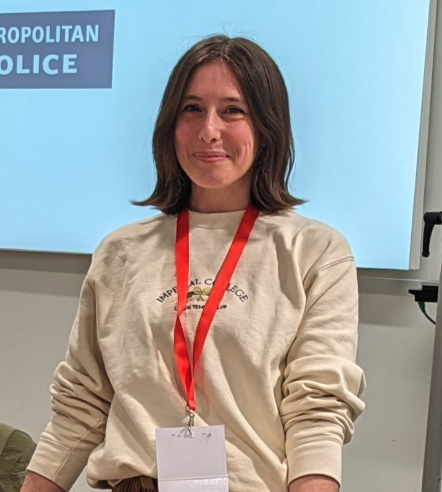
Dr Alexandra Thomas leads the development and delivery of conservation-focused training programmes at the Durrell Conservation Trust. Her work centres on knowledge exchange and growth within conservation teams and supporting practitioners working closest to biodiversity challenges.
Alongside her role at Durrell, Dr Thomas conducts independent research specialising in the application of human forensic science to wildlife crime. Her work examines the underutilisation of established forensic techniques, such as touch DNA and fingerprint analysis, and identifies best-practice methods for their effective integration into wildlife crime investigations.
A strong advocate for cross-disciplinary collaboration, she works closely with forensic specialists, law enforcement, and academic researchers to promote holistic, evidence-based approaches to tackling wildlife crime.
Committed to empowering those on the front lines of conservation, Dr Thomas designs training programmes that prioritise knowledge exchange, practical skill-building, and multi-stakeholder developed solutions. Her approach emphasises evidence-based frameworks and meaningful partnerships, ensuring that training is both scientifically robust and grounded in real-world needs.
.png.webp)